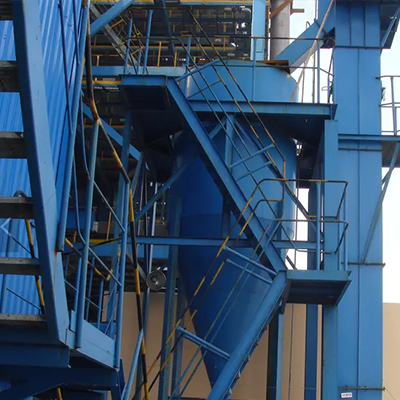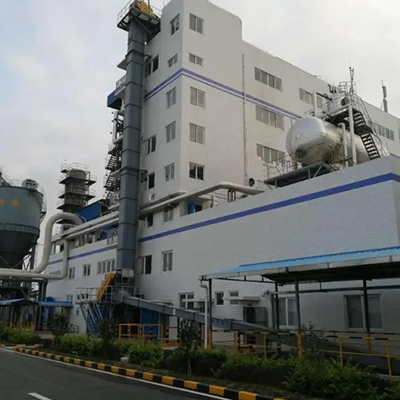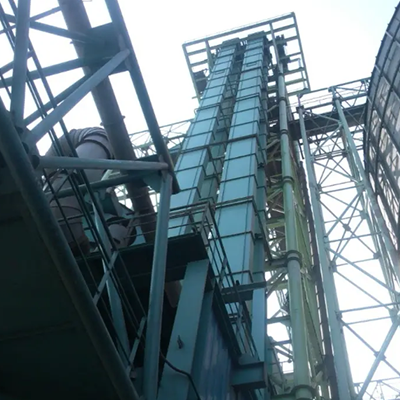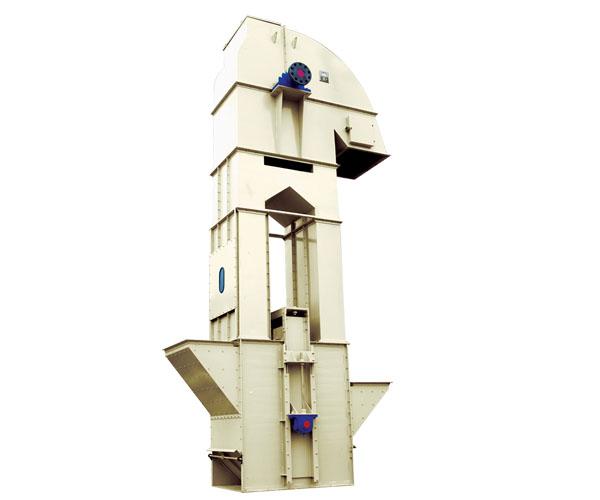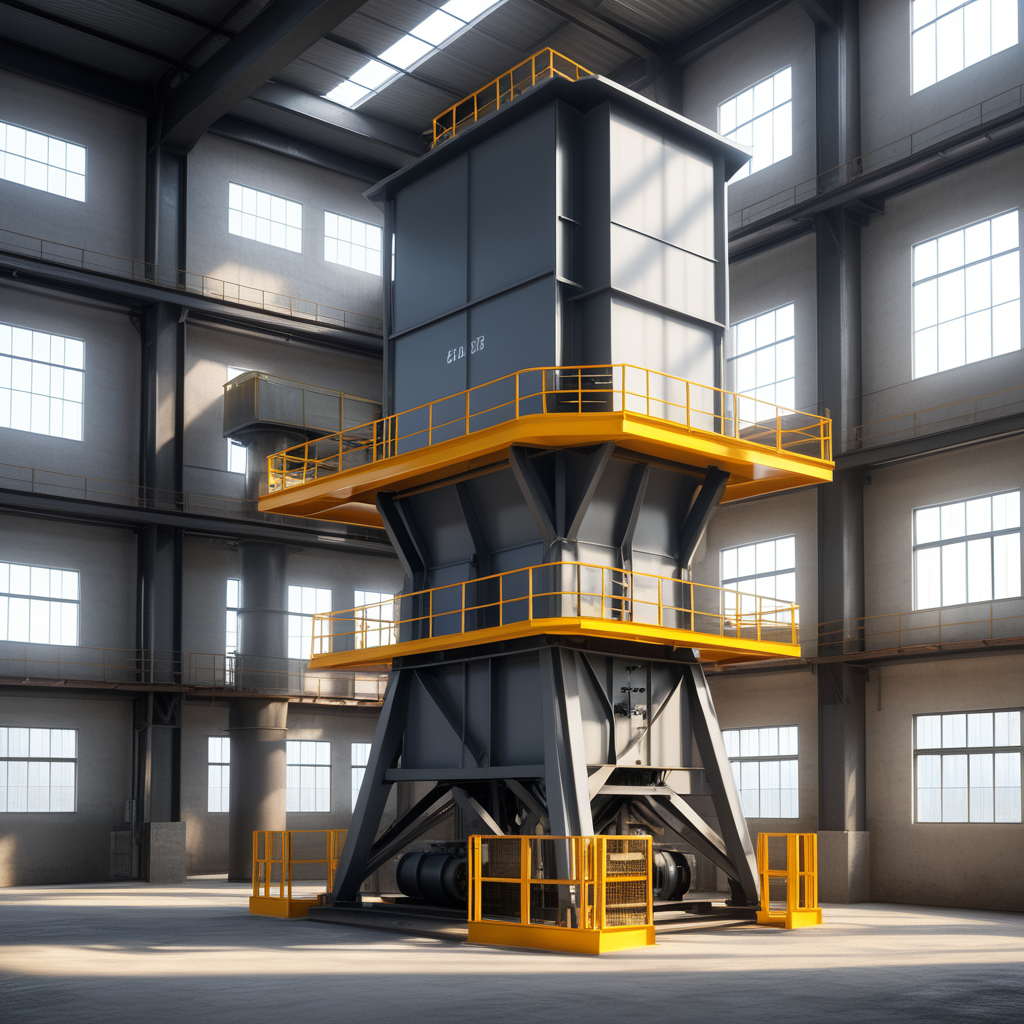

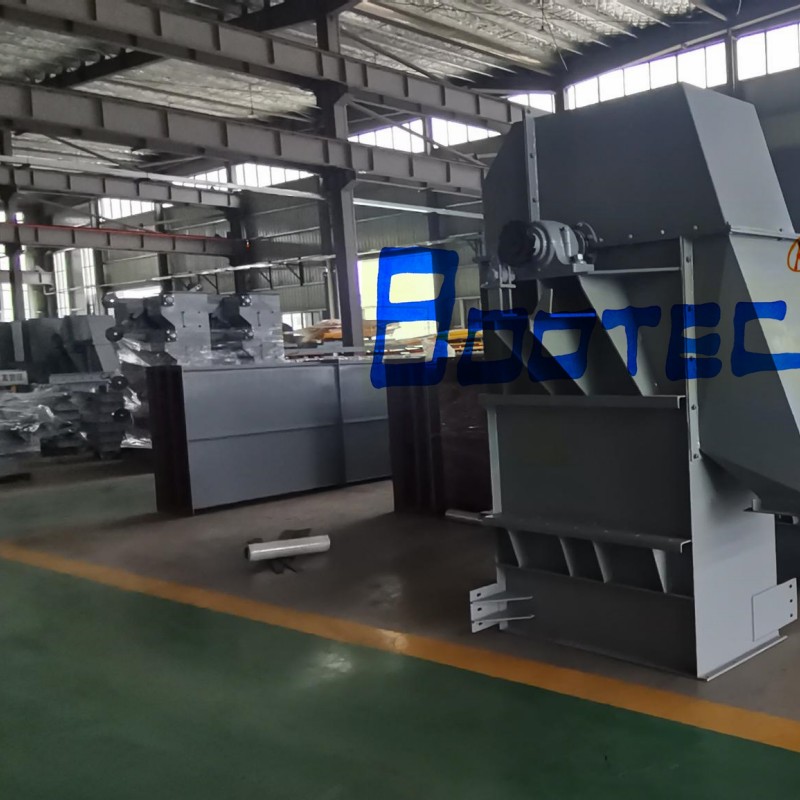
Heavy Duty Material Handling Conveyors Machine Bucket Elevator
Heavy Duty Material Handling Conveyors Machine Bucket Elevator
BUCKET ELEVATOR APPLICATIONS
Due to their versatility, bucket elevators are common in a number of industries. Examples of common bucket elevator applications include:
- Fertilizer Plants
- Limestone Processing Facilities
- Power Plants
- Pulp and Paper Mills
- Steel Production Plants
COMMON BUCKET ELEVATOR MATERIALS
Bucket elevators can handle a wide range of free-flowing materials with varying characteristics. Light, fragile, heavy, and abrasive materials can all be transferred using a bucket elevator. Examples of materials conveyed via bucket elevator include:
- Aggregates
- Animal Feeds
- Calcined Coke
- Fertilizer
- Fly Ash
- Frac Sand
- Lime
- Minerals
- Potash
- Woodchips
- Coal
Bucket elevators are not recommended for use with material that is wet, sticky, or has a sludge-like consistency. These types of materials tend to create discharge issues, with build-up being a common problem.
SELECTION & TECHNICAL QUESTIONS
Q1: How do I select the right conveyor model? What information should I provide?
> To recommend the most suitable solution, please provide the following details:
> 1. Material type: What material are you conveying? (e.g., fly ash, wood chips, biomass pellets, bottom ash, etc.)
> 2. Material properties: Particle size, temperature, moisture content, abrasiveness
> 3. Capacity requirement: How many tons per hour (t/h) do you need?
> 4. Installation conditions: Conveying distance, incline angle, space limitations
> 5. Application industry: Which industry is this for? (e.g., waste-to-energy plant, biomass power plant, cement plant)
> You can also email us or contact us via WhatsApp. Our engineers will get back to you within 24 hours.
Q2: What is the difference between screw conveyors and chain conveyors? Which one should I choose?
> Both types have different applications:
> – Screw Conveyors: Best for powdery and small-grain materials (e.g., fly ash, cement powder). Good sealing performance, simple structure, low maintenance cost.
> – Chain Scraper Conveyors: Best for bulky, highly abrasive materials (e.g., bottom ash, municipal solid waste, biomass fragments). Supports multiple inlet and outlet points.
> – Bucket Elevators: Ideal for vertical or steep-incline material lifting.
> If you are not sure, tell us your material and working conditions, and our engineers will help you choose.
Q3: Can your equipment handle high-temperature materials? What is the maximum temperature?
> We can customize equipment according to material temperature:
> – Standard type: 0~80°C, carbon steel
> – Medium temperature type: 80~200°C, thickened wear-resistant liner
> – High temperature type: 200~400°C, special heat-resistant steel, optional cooling jacket
> Please tell us your material temperature, and we will recommend the most suitable material solution.
Q4: Are there any limits on conveying distance and lifting height?
> Standard design range:
> – Screw conveyor: Single section up to 70 meters; multiple sections can be connected for longer distances
> – Chain conveyor: Single machine up to 60 meters
> – Bucket elevator: Lifting height up to 50 meters
> We can also customize for extra-long distances or special angles. Contact us for detailed solutions.
Q5: Do you provide explosion-proof design?
> Yes. For explosive and flammable conditions such as pulverized coal and biomass dust, we offer:
> – Explosion-proof motors (Ex d IIB T4 standard)
> – Reserved openings for explosion vents / rupture discs
> – Fully sealed structure to prevent dust leakage
> Please specify your explosion-proof rating requirements.
CUSTOMIZATION & MANUFACTURING
Q6: Do you support customization? What is the lead time?
> Over 90% of our equipment is customized according to customer working conditions. Standard models take about 90–120days. Special customizations take 120–180 days, depending on configuration complexity.
Q7: What material options do you offer?
> Common materials include:
> – Carbon steel (Q235B): Standard working conditions
> – Wear-resistant steel (NM400/NM500): Highly abrasive materials
> – Stainless steel 304/316L: Food, chemical, corrosion-resistant requirements
> – Bi-metal wear-resistant composite plate: Extreme abrasion conditions
> We will recommend the most cost-effective material solution based on your material properties.
Q8: What certifications do you have?
> We hold the following certifications:
> – ISO 9001:2015 Quality Management System
> – ISO 14001 Environmental Management System
> – ISO 45001 Occupational Health & Safety Management
> – CE Certification (EN 1090 Steel Structure)
> If you need scanned copies of specific certificates, please contact us.
DELIVERY & LOGISTICS
Q9: Which countries do you export to? Do you have export experience?
> Our equipment has been exported to more than 20 countries worldwide, including:
> – Europe: Germany, France, Poland, Turkey, etc.
> – Southeast Asia: Singapore, Thailand, Indonesia, Vietnam, etc.
> – Middle East: Saudi Arabia, UAE, etc.
> – South America**: Brazil, Chile, etc.
> We are familiar with the full export process: packaging, customs declaration, and ocean freight. We can provide FOB, CIF, and other trade terms.
Q10: What is your packaging method? Is it suitable for long-distance ocean shipping?
> Export-standard packaging:
> – Large items / complete machines**: Rust prevention + waterproof film + fumigated solid wood pallet
> – Precision components: Wooden case with shock-absorbing filling
> – Random accessories: Categorized packing with detailed packing list
> All wooden packaging meets IPPC fumigation standards for direct customs clearance.
Q11: What is your minimum order quantity?
> We do not have a strict minimum order quantity. Single-unit orders are welcome. Bulk orders can enjoy more favorable pricing.
INSTALLATION & AFTER-SALES
Q12: Do you provide installation guidance? Do engineers need to come to site?
> We offer two service options:
> 1. Remote guidance: Detailed installation drawings and operation manuals, video guidance for installation (free of charge)
> 2. On-site service: Dispatch engineers to site for installation and commissioning (travel costs are additional)
> Most customers choose remote guidance. Our equipment is designed as a modular structure for easy installation.
Q13: What is the warranty period? What are the wearing parts?
> Standard warranty period is 12 months (from the date of arrival at port).
> Wearing parts list:
> – Chain / screw flights: Approximately 1–3 years, depending on material abrasiveness
> – Liners: Approximately 2–4 years
> – Bearings: Approximately 2–3 years
> We recommend ordering a wearing-parts spare kit together with your first order.
Q14: How do you solve problems during operation?
> We provide 7×24 technical support:>
> – Response within 24 hours for technical issues
> – Remote video troubleshooting guidance
> – Engineer on-site service when necessary
> – Common spare parts in stock for fast delivery
QUOTATION & COOPERATION
**Q15: How can I get a quote? How long does it take?
> Quotation process:
> 1. You provide material parameters, capacity, installation conditions, and other requirements
> 2. Our engineers evaluate and select the appropriate model
> 3. Formal quotation and technical proposal provided within 7 working days
> You can contact us via email, or the online inquiry form.
Q16: What are your payment terms?
> Standard payment terms:
> – 30% advance payment: After contract signing, to start production
> – 70% balance: Before shipment, or against copy of Bill of Lading
For long-term cooperative customers, more flexible payment terms can be negotiated.
Follow these 3 steps to find your ideal conveyor solution
Step 1: Identify Your Material Type
Different materials require different conveyor designs. Tell us what you are conveying:
| Material Category | Examples | Recommended Conveyor Type |
| Powder / Fine Granules | Fly ash, cement powder, lime powder | Screw Conveyor |
| Small Granules / Pellets | Biomass pellets, plastic granules, grain | Screw Conveyor / Belt Conveyor |
| Fragments / Chips | Wood chips, bark, agricultural residues | Chain Scraper Conveyor |
| Bulky / Abrasive | Bottom ash, slag, MSW, clinker | Chain En-Masse Conveyor |
| Vertical Lift | Any bulk material needs vertical transport | Bucket Elevator |
Step 2: Define Your Working Conditions
Please prepare the following parameters before contacting us:
| Parameter | Why It Matters | Example |
| Capacity (t/h) | Determines conveyor size and power | 10 t/h, 50 t/h, 100 t/h |
| Conveying Distance (m) | Determines machine length | 15m horizontal, 30m incline |
| Incline Angle (°) | Affects capacity and design | 0° horizontal, 30° incline |
| Material Temperature (°C) | Determines material grade | Ambient, 150°C, 300°C |
| Moisture Content (%) | Affects discharge design | Dry, damp, wet (needs dewatering) |
| Abrasiveness | Determines liner thickness | Low, medium, high |
| Application Industry | Determines certification needs | Power plant, cement, mining, recycling |
Step 3: Choose Configuration Options
Based on your answers above, our engineers will recommend:
Material grade — carbon steel / wear-resistant steel / stainless steel
Sealing type — open trough / fully enclosed / gas-tight
Drive system — motor power, gearbox brand, speed range
Auxiliary options — explosion-proof motor, cooling jacket, cleaning device, level sensors
Not Sure Where to Start?
Send us your basic requirements, and our engineers will design a customized solution for you — completely free.
Email: bootec@bootecgroup.com Response time: Within 24 hours
[REQUEST A FREE QUOTATION →]